

Your mobile application can be exceptional. Nevertheless, users won’t discover it if it gets lost deep in the query results....

22 October, 2026

The smartphone market in Southeast Asia (SEA) is highly diverse. User preferences, market shares, and brand growth rates vary significantly from country to country. For mobile marketing professionals, understanding these differences helps assess the potential of OEM traffic and identify the most promising markets for app promotion. This article examines smartphone vendor market shares across key SEA countries.
Southeast Asia (SEA) is a market with approximately 850 million mobile connections, where Android’s prevalence offers broad reach for OEM advertising. Let’s examine the landscape across individual countries. We divided them into three groups: large, mid-sized, and small markets.
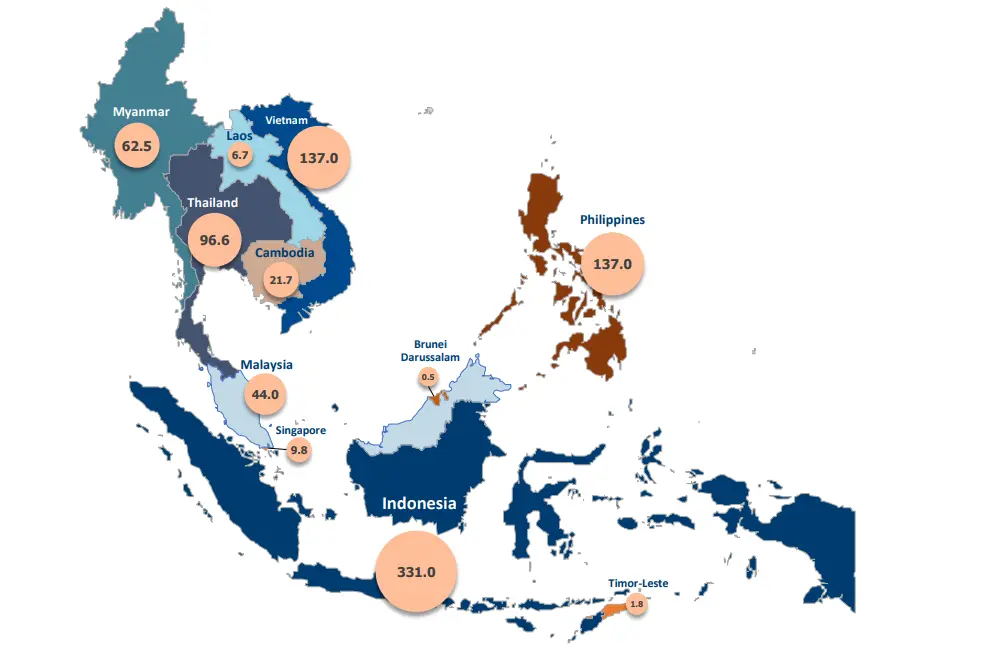
Indonesia has the largest mobile subscriber base in the region, with approximately 331 million connections at the end of 2025. However, the number fell by 18 million, or 5.2%, over the year, likely due to fewer active SIM cards. In contrast, the Philippines and Vietnam recorded growth in mobile connections of 3% and 0.4%, respectively. Thailand saw a 1.1% decline.
Against this backdrop, the region’s smartphone market is stagnating. According to Omdia, smartphone shipments to Southeast Asia fell by 1% in 2025 compared with 2024, reaching 100 million devices. The downward trend accelerated in 2026, with shipments dropping by 23% year over year in the second quarter. Samsung remains the leading vendor by shipments, accounting for 32% of the market in Q2 2026.
The region’s largest markets—Indonesia, the Philippines, Vietnam, and Thailand—account for the bulk of Southeast Asia’s mobile subscriber base. Android’s average share of user activity in these countries reached 74.5% in 2026 (January–mid-October). This makes them key markets for OEM advertising. The channel operates exclusively on Android. Apple does not provide access to system-level advertising inventory.
Vietnam and Thailand are markets where Apple has a strong presence, accounting for 40.75% and 32.01%, respectively, which limits access to OEM advertising inventory. However, Thailand still has a relatively high combined Android share of 68.0%. Indonesia and the Philippines, by contrast, offer a broad range of Android inventory. Apple’s share is relatively low in both markets. And no single vendor controls even one-fifth of the market. At the same time, these two countries have the highest shares of devices classified as Unknown, at 21.3% and 22.9%, respectively, making audience targeting more challenging.
Over the past two years, the device ecosystems across all four major SEA markets have changed. But in different ways. The overall trend is a growing Apple share in three of the four markets. In Indonesia, Apple’s share has nearly tripled since the end of 2024, rising from 8.0% to 22.1%. Growth has been more modest in the other markets. Apple’s share in Thailand has remained relatively stable, ranging from 29.7% to 33.8%.
The Unknown segment is growing in Indonesia and the Philippines. Android brands such as Oppo, Xiaomi, and Vivo are losing ground. Both markets offer broad reach. But the growing share of unidentified devices and Apple devices poses a risk to campaign targeting accuracy, particularly in Indonesia.
With the highest iOS share among the major markets, Vietnam is the most restrictive market for OEM advertising. Samsung leads among Android brands but has gradually lost ground to Apple over the past two years, with its share declining from 26.0% to 20.5%. Thailand, in turn, is the most stable market in the group. No brand shows a pronounced trend. Unknown does not rank among the top five segments. And Android brands maintain relatively strong positions. These factors make Thailand a more transparent and predictable market for OEM advertisers.
Southeast Asia’s mid-sized markets include Malaysia, Myanmar, and Cambodia. These countries have smaller mobile subscriber bases but distinct market characteristics. The share of Android devices in user activity varies significantly across these markets in 2026, reaching 84.9% in Myanmar while remaining below 58% in Malaysia and Cambodia (57.7% and 52.4%, respectively).
The device ecosystems across SEA’s mid-sized markets are diverse. Myanmar stands out for Xiaomi’s dominance (36.5%). A low share of devices classified as Unknown (7.3%). Apple’s relatively limited presence (15.1%) making it the most attractive market for OEM advertising. Malaysia and Cambodia present the opposite picture. Apple’s dominance, with shares of 42.3% and 47.6%, respectively, limits the reach of OEM campaigns. The Android segment is primarily represented by Samsung, Oppo, and Xiaomi.
In Myanmar, Xiaomi maintains its leading position. It accounting for 34–40% of mobile device internet traffic. Apple’s share has gradually increased over the past two years, rising from 8.5% to 14.7%. The other brands in the top five have shown no significant changes. Meanwhile, smaller brands are losing ground, potentially ceding market share to Apple. The “Other” category includes Unknown devices, Tecno, Infinix, Realme, and other brands. Overall, Myanmar is a relatively predictable market for OEM advertising.
Malaysia has seen rapid growth in Apple’s share, from 29.6% to 45.2% over two years. Android brands in the top five are gradually losing ground. But the decline has been more pronounced among smaller brands. These include Vivo, Honor, Realme, Huawei, and others. These trends suggest that the addressable market for OEM advertising is shrinking.
Cambodia has the highest level of Apple dominance among the markets in this group. From Q4 2024 to Q2 2026, Apple’s share increased from 41.8% to 50.7%. But it fell to 42.5% in Q3 2026. A decline of 8.1 percentage points in a single quarter. At the same time, Oppo’s share jumped from 15.5% to 21.4%, an increase of nearly 6 percentage points in one quarter. This may indicate either a genuine shift in consumer preferences or a change in device identification methodology. Samsung, Vivo, and Xiaomi have remained relatively stable.
Southeast Asia’s small markets include Singapore, Laos, Brunei, and Timor-Leste. These countries have smaller mobile subscriber bases but offer different conditions for OEM advertising. Singapore stands out as the region’s most developed market, with a high iOS share and mature digital infrastructure. Laos, Brunei, and Timor-Leste are still catching up, with Android predominating. Across these markets, Android accounted for an average of 64.3% of user activity in 2026.
SEA’s small markets have diverse device ecosystems. Singapore is the most developed market in this group and the only one whose market structure resembles that of Western Europe. However, the Unknown segment accounts for 12.0%, a relatively high figure for a developed market. Apple dominates in Singapore and Brunei, limiting the reach of OEM advertising. Laos and Timor-Leste, by contrast, offer a broad range of Android inventory. Android brands collectively account for more than 60% of mobile device internet traffic in Laos. Samsung and Oppo are on par with Apple in Timor-Leste. However, the high share of Unknown devices in Timor-Leste (11.2%) makes audience targeting more challenging.
In Singapore, Apple’s share grew from 30.9% to 48.4% over two years, with the most significant increase occurring in 2026. At the same time, the Unknown segment declined sharply, falling from a peak of 43.8% in Q3 2025 to 4.6% in Q3 2026. These two trends are likely related. As device identification improves, some previously unidentified devices may have been reclassified as Apple devices. Samsung also strengthened its position, increasing its share from 13.7% in Q3 2025 to 21.0% in Q3 2026. If iOS continues to gain share, the addressable market for OEM advertisers will shrink.
Laos has also seen a relatively sharp increase in Apple’s share since Q4 2025, largely at the expense of smaller brands, including Infinix, Xiaomi, Realme, and others. The other manufacturers in the top five—Samsung, Vivo, and Tecno—have remained relatively stable over the past two years. Laos remains an attractive market for OEM advertising. Android accounted for more than 60% of mobile device internet traffic in Q3 2026, with market share distributed across several vendors.
Southeast Asia is a promising but diverse region for OEM advertising. Two key trends—the growing share of Apple devices and declining device identification accuracy—are limiting OEM channel reach in several markets. Thailand, Myanmar, and Laos are the most attractive markets for OEM placements due to their balanced Android ecosystems. Vietnam, Cambodia, and Singapore are the most challenging markets, where iOS holds a significant share.
Your mobile application can be exceptional. Nevertheless, users won’t discover it if it gets lost deep in the query results....

The ENEA smartphone market varies significantly from country to country. Smartphone brand popularity, device market share, and available OEM channels...