
Your mobile application can be exceptional. Nevertheless, users won’t discover it if it gets lost deep in the query results....

20 August, 2026

Concerts, exhibitions, show presentations — today's audiences want more than just watching. They want to immerse themselves and experience vivid emotions. That's why no major event is complete without CGI, which capture and guide audience attention. In this article, we explore what live show visuals entails, how CGI is created for exhibitions and concerts, and which performances made waves across social media.
The entertainment and media market continues to grow rapidly. According to PwC forecasts, global industry revenues are expected to reach $3.5 trillion by 2029, driven by advertising, live events, and video games. What’s more striking is that in 2024, non-digital entertainment formats — live music, exhibitions, and more — accounted for 61% of consumer spending. This trend is set to continue. So brands and artists need to leverage computer graphics to stand out, capture audience attention, and turn events into memorable experiences.
Show content is a format of entertainment designed primarily to capture audience attention and evoke emotion. With computer graphics tools, such projects can deliver striking visual effects. For instance, dynamic 3D installations, video mapping, complex stage projections, and laser animation.
Show content must perform in real time and handle large-scale screens. Moreover, it must maintain visual quality under any lighting conditions. CGI fully addresses these requirements and enables:
There are several CGI formats used in show content. The choice depends on several factors. You should take into account the venue, the goals and objectives of the event, and technical capabilities. Some CGI solutions deliver scale, while others focus on detail and audience interaction. At our creative studio, we work with all formats — from video mapping and projection shows to visual content for exhibitions and presentations. Below is a brief overview of each format. More detailed breakdowns will be in future articles.
Video mapping, or 3D projection, is a format where CGI content is projected onto physical objects of complex shape. For example, buildings, arches, sculptures, or stage sets. This technique brings any surface to life, creating a striking visual impact.
Video mapping is used when the goal is to create large-scale installations or transform spaces without making physical changes. It works particularly well for New Year’s shows, product presentations, façade projections, and outdoor events.
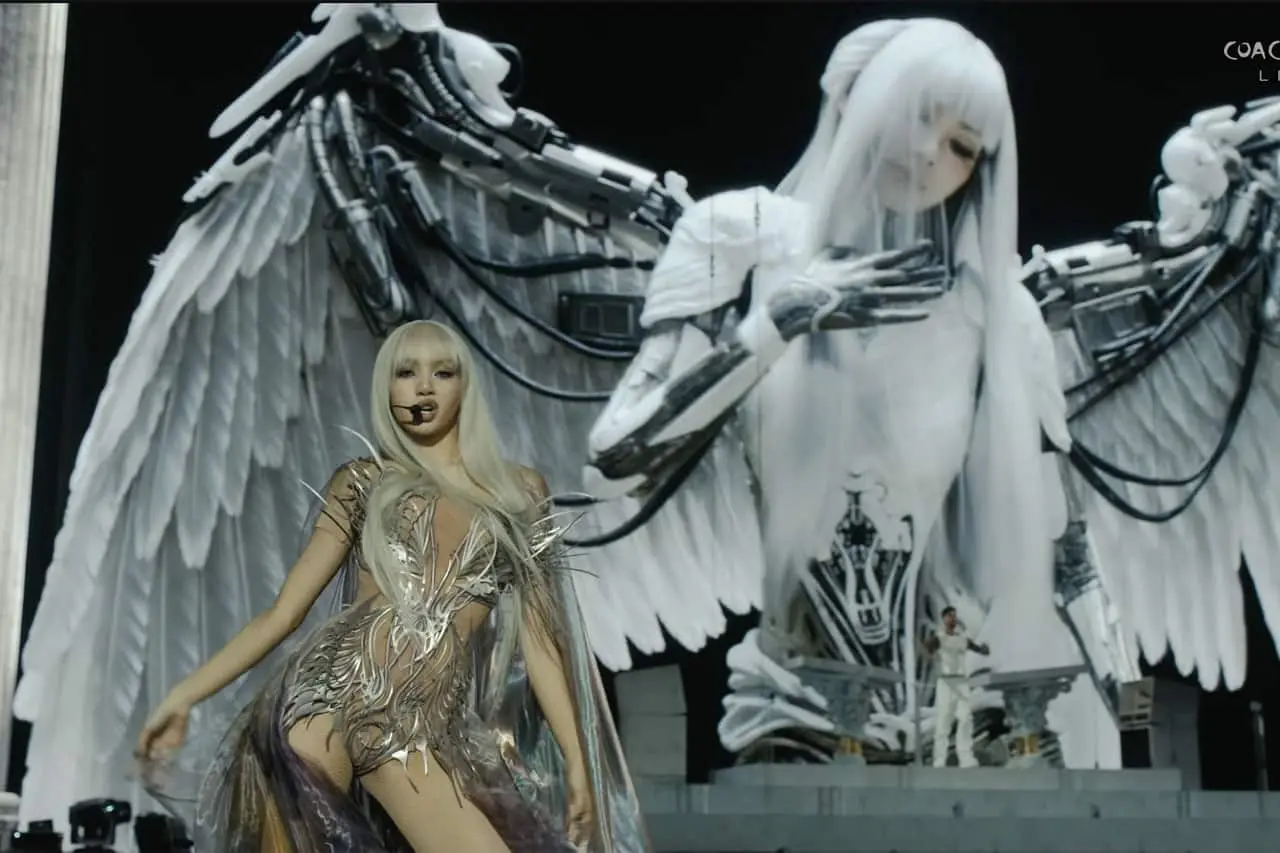
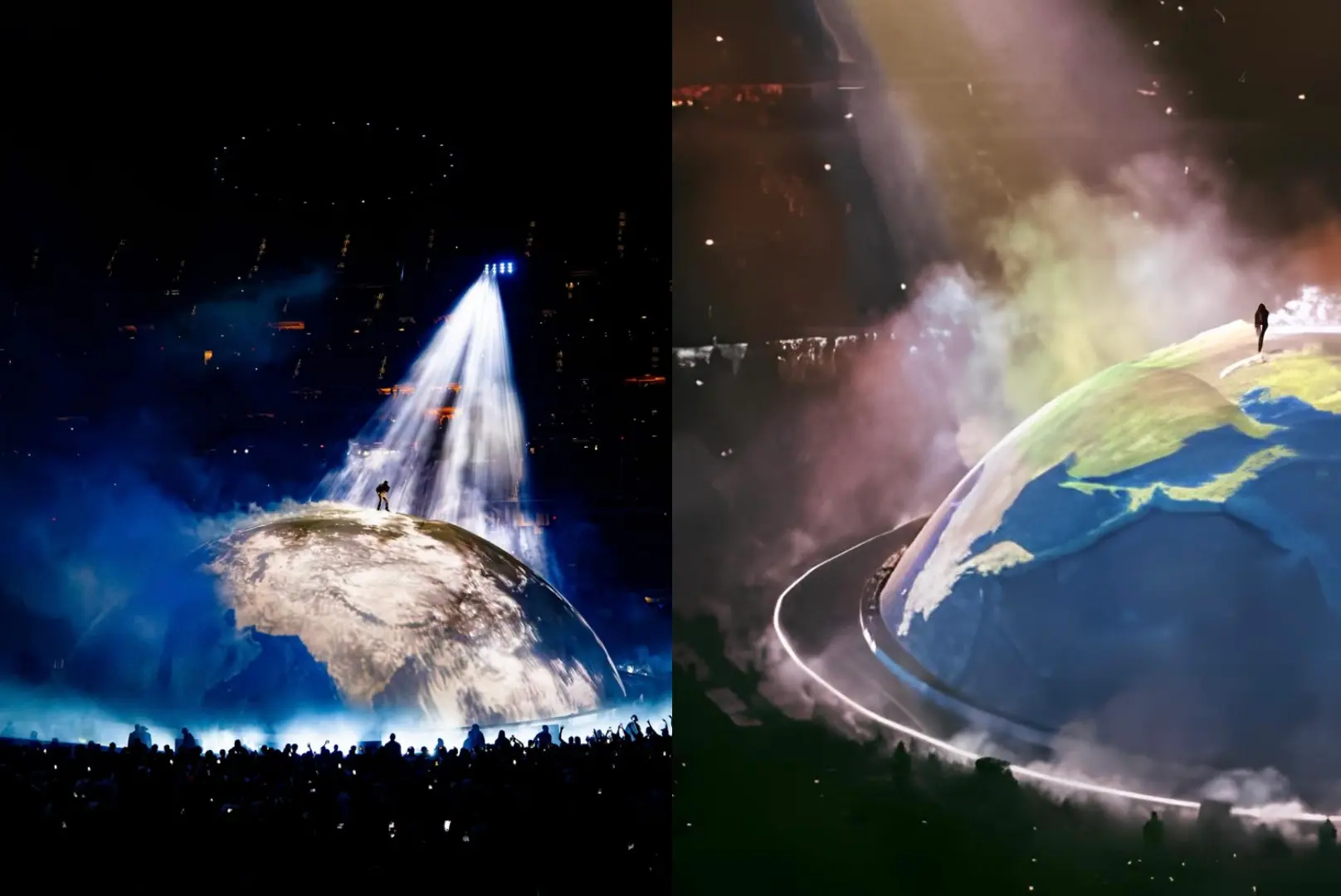
Unlike video mapping, projection visual content focuses on environmental immersion rather than adherence to an object’s geometry. Typically, multiple projectors are used to display CGI content across the stage, floor, and walls. Some of the most striking examples of stage visuals in 2026 included Kanye West’s performances — where an otherworldly space effect was created on stage — and Lisa’s (Lalisa Manobal) show, featuring a projection of a giant angel.
LED screens and LED walls are the backbone of modern show content. However, creating visuals for them requires more than just artistic sensibility. It demands a thorough understanding of technical constraints and audience perception. Key factors to consider include pixel pitch, panel seams, contrast, resolution, and aspect ratio. LED screens and walls can display immersive CGI content, brand and promo videos. It will be a good tool for informational and interactive materials.
Exhibition visual content is often the first point of contact between a potential client and a brand. It needs to do more than just inform — it must capture attention and spark interest. In this context, computer graphics become an ideal tool for effectively addressing business objectives at the event. CGI content for exhibitions includes interactive 3D stands and installations, promo videos, and demo reels. It also includes AR/VR experiences.
Modern CGI tools transform static presentation slides into dynamic visual narratives. Motion graphics, titles, and smooth visual transitions help keep the audience engaged while clearly illustrating product or service features.
Laser animation has a wide range of applications and is used at major event openings, concerts, and promotional campaigns. 2D/3D laser animation or laser mapping is synchronized with music and the movement of light graphics, with control handled through specialized software.
A standout example of laser animation was the nighttime light show in Toronto during the 2026 FIFA World Cup. Using 3D mapping and laser animation, the FIFA trophy, the official mascots of Canada, Mexico, and the United States, along with a football, dominated the night sky above the waterfront. The show was built on the fundamental principles of visual storytelling.
Yes, music videos are also part of show content. Computer graphics enable directors to bring their boldest ideas to life while evoking powerful emotions in viewers. Eric Hassan Gomez, an audiovisual artist who has worked with renowned artists such as Peso Pluma, Kenia Os, and Belinda, puts it this way: “With directors, you rarely discuss technical details. You talk about emotions. You develop the story and what you want people to feel, even if it’s just a six-second clip.”
The principles of creating CGI for show content are similar to those of standard production. However, there are certain differences related to the technical specifications of the venue and the scale of LED screens. At our studio, for example, the production cycle for show CGI includes the following stages:
As we mentioned earlier, computer graphics technologies enable the creation of visual effects and help solve both marketing and creative challenges. Below are a few examples of outstanding show content that would have been impossible without CGI.
The King of Pop was an early adopter of computer graphics in his music videos, setting high standards for the industry. Early digital graphics were used in the following 1990s videos:
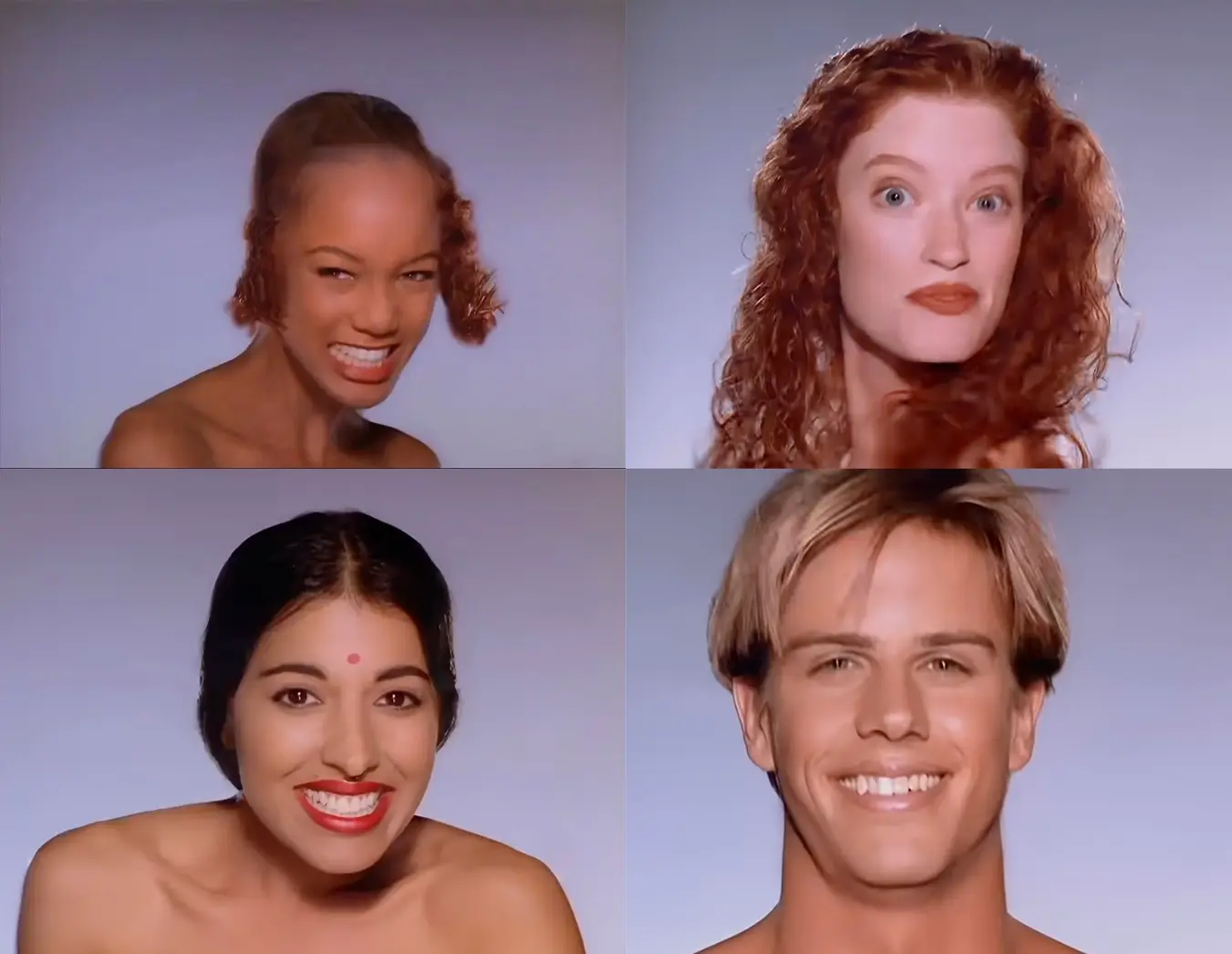
1. “Black or White” (1991). The studio Pacific Data Images applied digital morphing technology. In the final four minutes of the video, we see faces of people of different races, genders, and ages seamlessly transforming into one another.
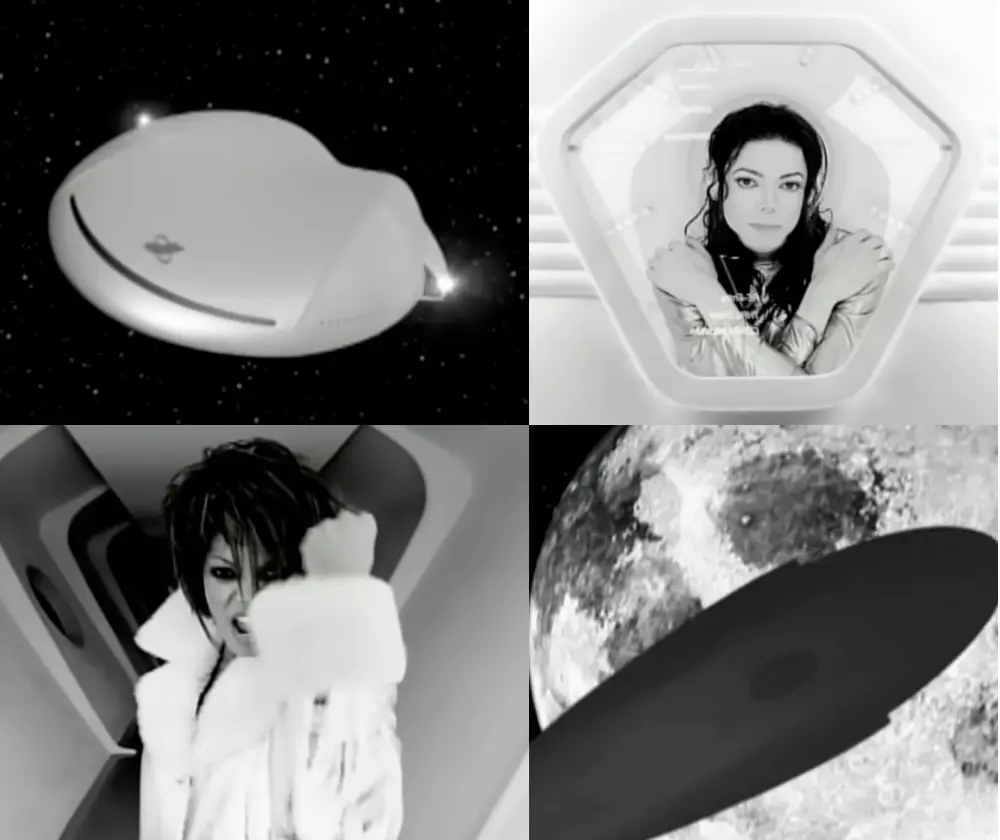
2. “Scream” (1995). Together with Janet Jackson, Michael shot the most expensive music video in history. It has a futuristic style: 3D spacecraft interiors, floating monitors, and digital set designs.
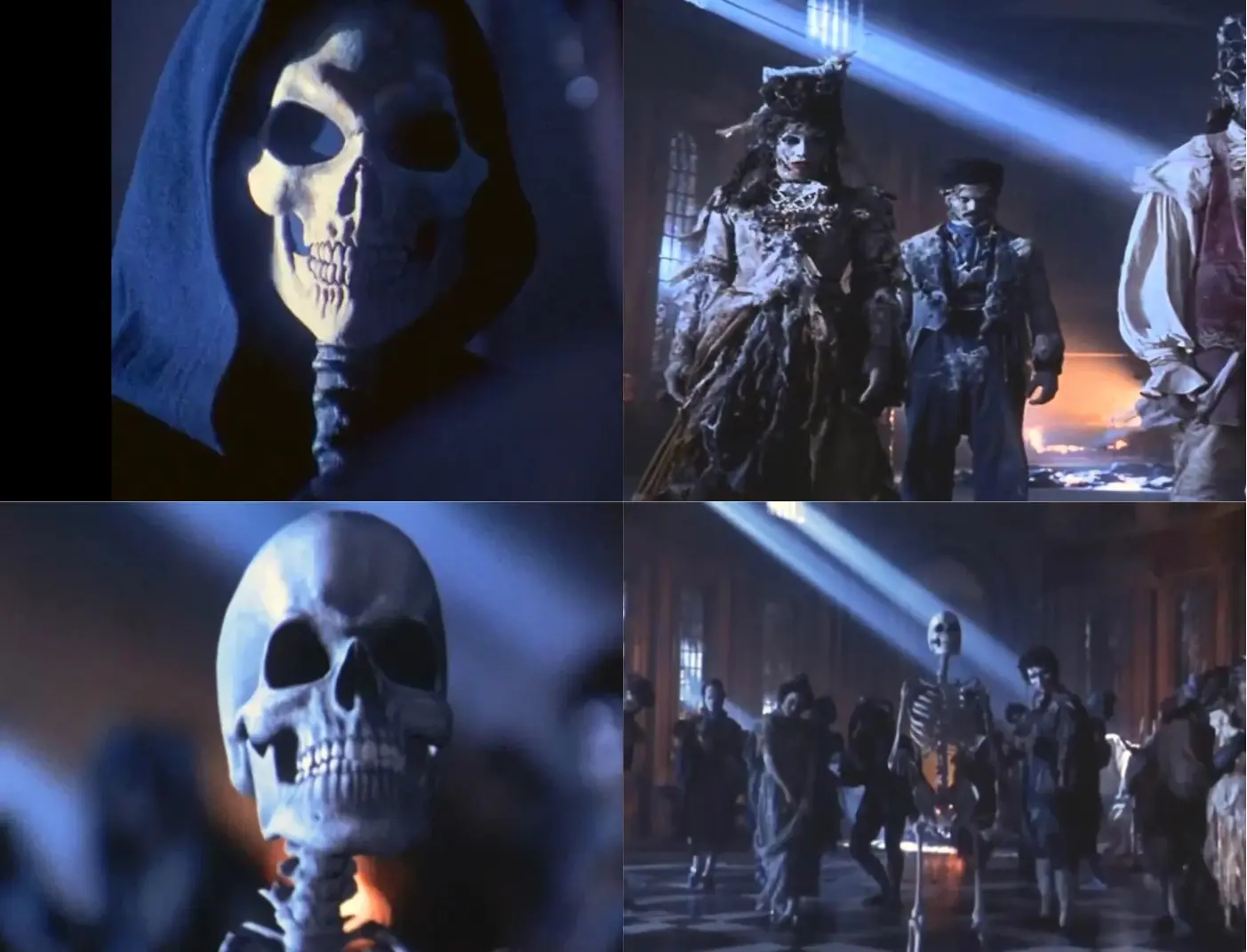
3. “Ghosts” (1996). To create the dancing skeleton — portrayed by Michael himself — motion capture technology and animation were used. As a result, the music video and short film created a true sensation.
At the Coachella 2026 festival, Lisa from BLACKPINK performed her song “Bad Angel.” She captivated the audience with a striking stage projection. A digital image of a giant angel hovered above the stage. To create this augmented reality effect, CGI technologies were used. The final result was displayed on the massive LED screen behind Lisa.
At a Kanye West concert, audiences witnessed a spectacular show. The artist performed on a stage designed as a massive globe. Using 3D projection mapping and anamorphic illusion technology, the performance blurred the line between physical reality and digital space.
In the future, audience expectations will only continue to rise. The market is already oversaturated with content. Viewers are exposed to dozens of visual messages every day. Being simply “bright” is no longer enough. You need to be unique, sometimes unexpected, and, of course, technically flawless.
As an experienced CGI studio, we would highlight two key trends:
At Acquisition.mobi, we create visual content for shows that drives emotion, engagement, and brand recognition. Adapting to the technical specifications of each venue, we offer CGI content for:
If you want your product to stand out at exhibitions or your show to leave a lasting impression on audiences, reach out to us at cgi@acquisition.mobi. We’ll provide a free consultation and propose a solution tailored to your needs.
Your mobile application can be exceptional. Nevertheless, users won’t discover it if it gets lost deep in the query results....
The ENEA smartphone market varies significantly from country to country. Smartphone brand popularity, device market share, and available OEM channels...